
Arrive & connect
Check in with the group, build readiness to participate, and identify a focus for the experience.
Spark brings the therapeutic process into purposeful activities and relationships. Students return to a consistent group to practice skills and work toward meaningful goals.
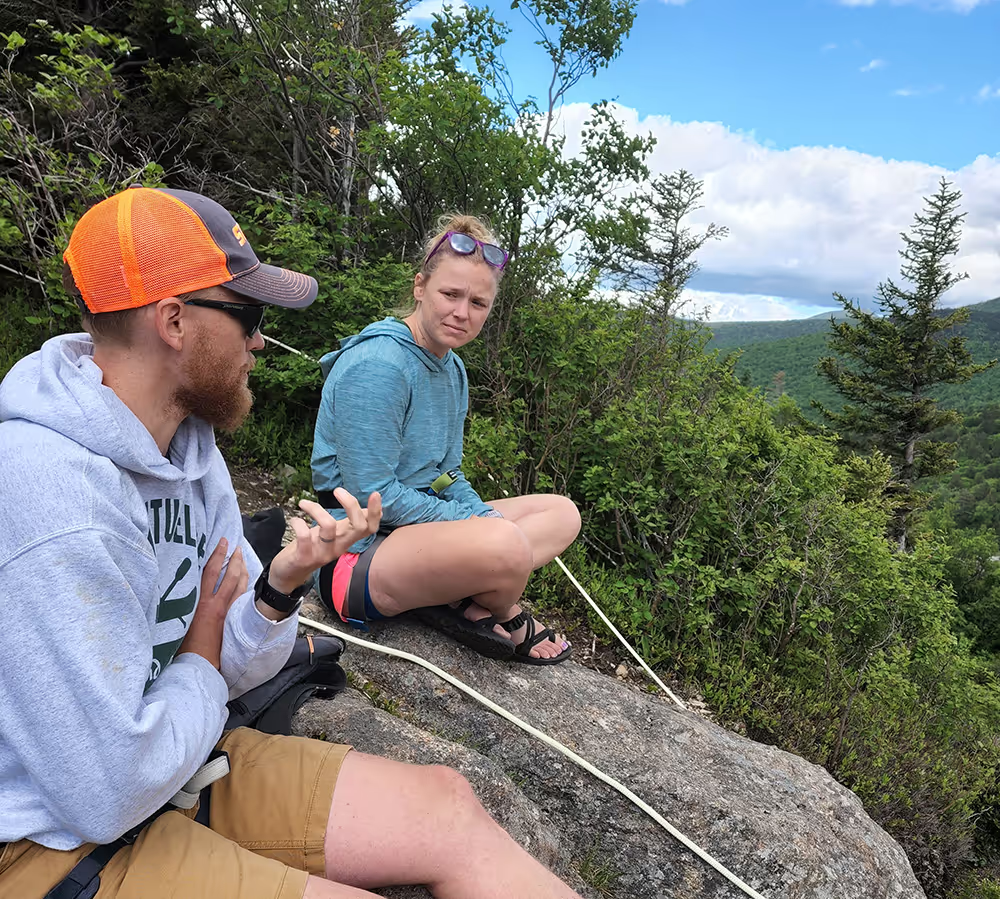
Ongoing relationships create room to try, reflect, and try again.
Our clinicians and facilitators use adventure-based experiences to help students work on emotional regulation, self-confidence, communication, resilience, and peer relationships. Clinicians can integrate CBT strategies and other therapeutic approaches when they fit the group’s goals. Goals are developed around the participants and the needs identified with the school.
A challenge may reveal an opportunity to ask for help, manage frustration, recover from a setback, or contribute to a group. Staff help participants notice what worked and connect it to daily life.
The recurring group gives students time to build relationships and revisit skills across different situations.
Check in with the group, build readiness to participate, and identify a focus for the experience.
Use a shared challenge or adventure to work on regulation, communication, confidence, and relationships in the moment.
Name what happened, reinforce useful choices, and return to the skill in future sessions.
Our starting conversation looks at the students’ strengths, needs, existing supports, and goals. We discuss group composition, participation expectations, and the role of school staff.
Before a series begins, the school and Adventurelore clarify consent and referral steps, the schedule and location, and an appropriate way to communicate about the work. We can also discuss what useful progress would look like and how to review the group’s goals together.
Discuss the population, goals, current supports, and what your school is hoping to address.
Determine a group structure, recurring schedule, and appropriate location together.
Clarify school collaboration, participation requirements, and how the program will support the agreed goals.
Groups can be structured on a recurring basis, such as weekly, every other week, or monthly. Timing is arranged with the school based on goals and availability.
We discuss programs at Adventurelore, at the school, and suitable adventure settings. The location depends on the participants, program design, and logistics.
Spark is an ongoing therapeutic group offering. Our community building and SEL experiences serve broader school community and skill-building goals and can be arranged as one-day programs.
We are exploring a separate homeschool Spark group. It is at the interest stage; ages, schedule, cost, and enrollment have not been established. Visit the homeschool page to learn more.
School budgets are stretched. PTA/PTO support, local sponsors, education foundations, and certain district funding sources may help make a program possible.
Community-building days: start with your PTA/PTO, education foundation, or a local sponsor. Some schools combine family contributions with school support so every student can participate.
Spark and ongoing therapeutic groups: ask your district about student-support funding and, when appropriate, IEP-related services.
View the school funding guideNew Hampshire · Massachusetts · Maine · Federal resources
Includes eligibility notes, official links, and sample request language.
Share your goals and the group you have in mind.