
Connect
Break the ice, meet classmates in new ways, and create opportunities to participate.
Shared challenges help students communicate, work with different peers, practice leadership, and contribute to a stronger school community.
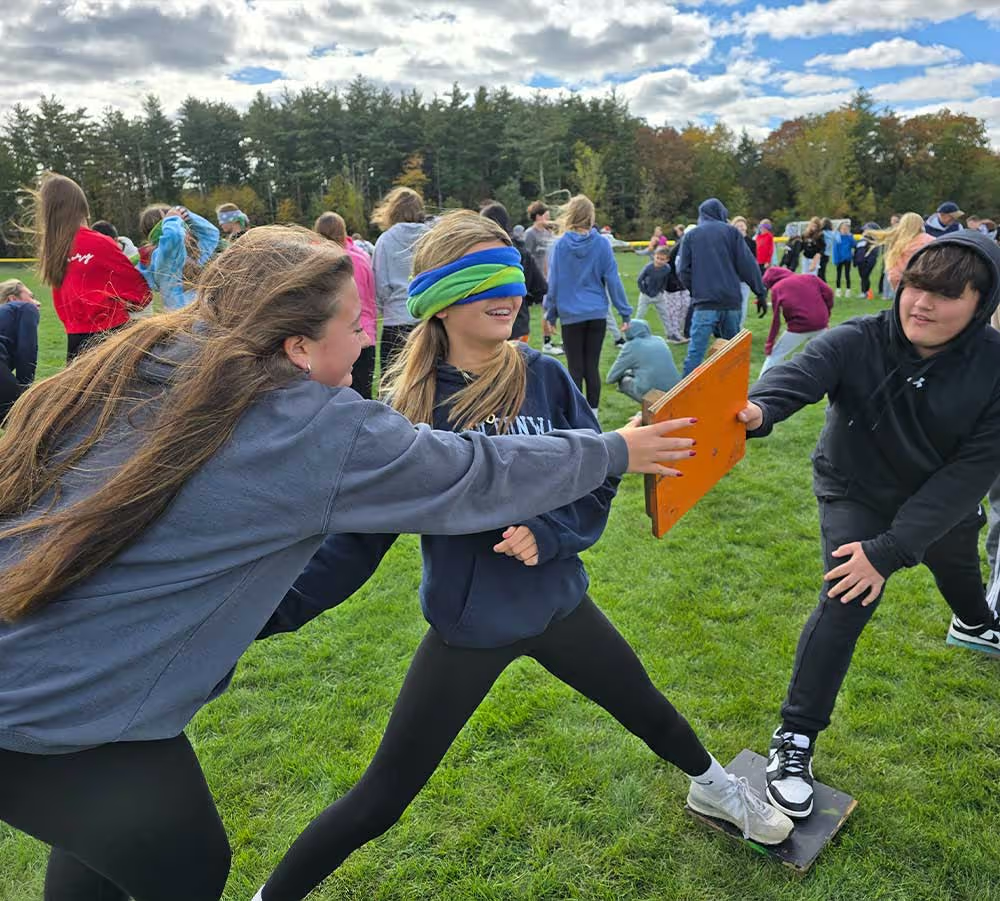
Break the ice, meet classmates in new ways, and create opportunities to participate.
Take on cooperative challenges that call for communication, problem-solving, and shared effort.
Reflect on the experience and connect it to how students treat one another at school.
Bring a class or larger student group to our Danville campus for an extended day of icebreakers, collaborative challenges, and outdoor experiences. We can discuss a shorter visit when the school day calls for it.
Our existing programs have used approximately 4½–5½ hours for a full day; the plan is customized for your group.
We can bring facilitated group activities and reflection to your campus. This can be a focused session or a longer school-day program designed with your team.
Focused sessions have often run about 1½–2 hours. Space, group size, and goals shape the format.
Programs can take place at your school or at Adventurelore in Danville. We tailor the format to the grade level, group size, time available, and purpose of the day.
At our site, a plan may include group initiatives, ropes elements, or waterfront activities when appropriate. At school, we build experiences around the space and time you have.
We tailor the sequence and pace to your students. This example shows how a community building day can develop.
Welcome the group and use icebreakers to help students participate and get to know one another.
Small-group initiatives invite students to listen, offer ideas, solve problems, and contribute in different ways.
Build toward more involved challenges or appropriate ropes course and waterfront activities when the program is at our site.
Facilitated discussion helps students identify what supported the group and what they can bring back to class.
Published formats include groups of approximately 10–70 at Adventurelore and 10–150 at school. The practical group size depends on ages, support needs, activities, space, and staffing. We discuss the fit before planning.
We work through timing, group lists, school staff participation, transportation, meals, access needs, and any required family paperwork with your contact person.
Discuss weather and location contingencies during planning. The activity mix depends on conditions and the space available.
Tell us about transitions, communication, participation, leadership, or group relationships. We shape the activities and reflection around the goals you identify together.
School budgets are stretched. PTA/PTO support, local sponsors, education foundations, and certain district funding sources may help make a program possible.
Community-building days: start with your PTA/PTO, education foundation, or a local sponsor. Some schools combine family contributions with school support so every student can participate.
Spark and ongoing therapeutic groups: ask your district about student-support funding and, when appropriate, IEP-related services.
View the school funding guideNew Hampshire · Massachusetts · Maine · Federal resources
Includes eligibility notes, official links, and sample request language.
We can help shape a program around the needs of your group.